Supported By

We undertake the conservation and restoration of paintings across a range of mediums, employing both traditional knowledge and scientific conservation methodologies. However, our core expertise lies in the conservation of Thangka paintings, a highly specialised field that demands an in-depth understanding of Buddhist iconography, traditional painting techniques, textile structures, and conservation ethics.
Since 2021, our studio has successfully conserved and restored more than 50 Thangka paintings belonging to monasteries and private households across Ladakh and Himachal Pradesh. The works have ranged from stabilising fragile and deteriorated paintings to addressing issues such as flaking pigments, structural damages, insect infestation, tears, smoke deposits, and previous inappropriate repairs. Each intervention is guided by the principles of minimal intervention, reversibility, and respect for the historical, artistic, and spiritual significance of these sacred objects.
Our experience has enabled us to develop specialised expertise in conserving Himalayan painted heritage while working closely with monastic communities and private custodians to ensure the long-term preservation of these invaluable cultural treasures.
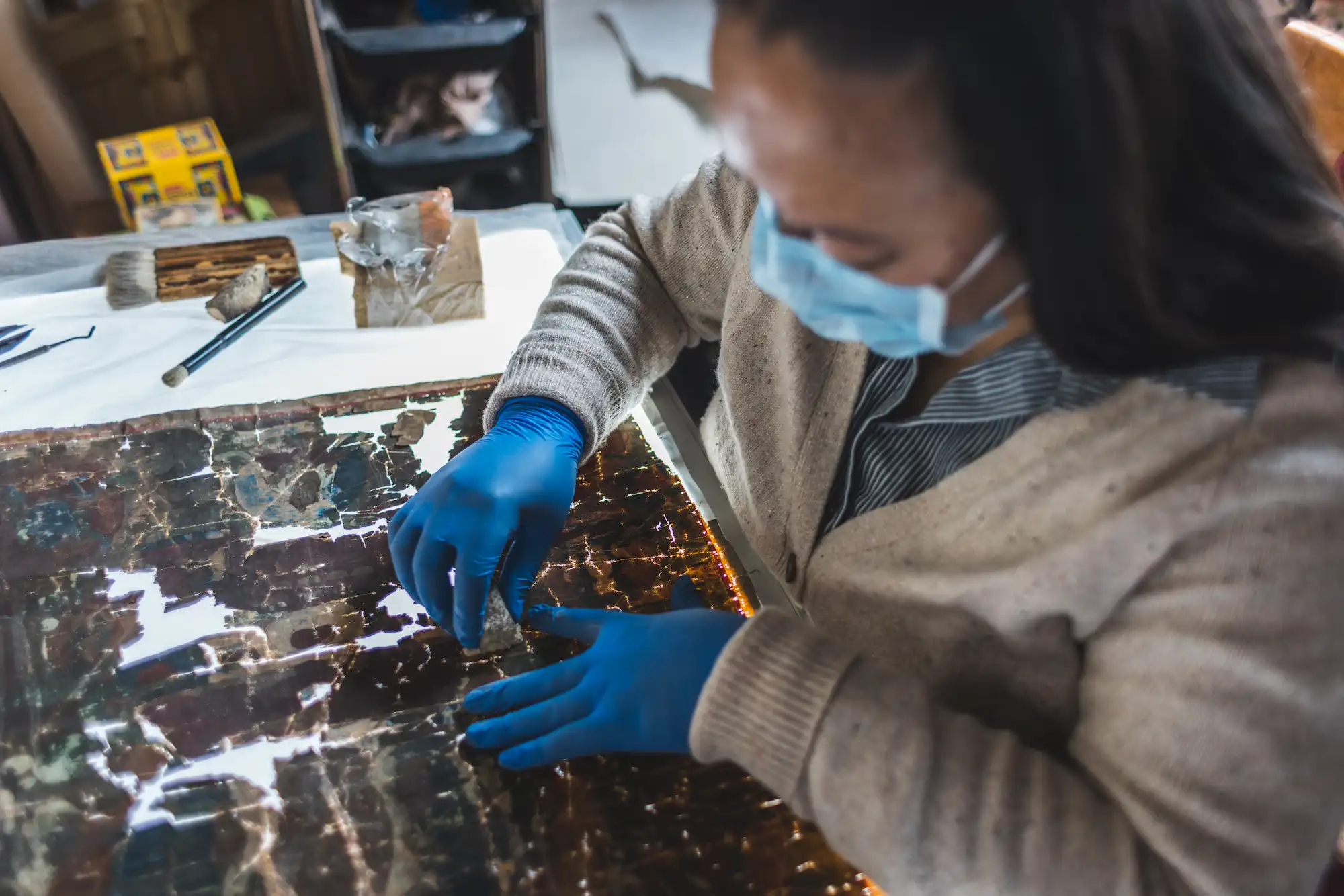
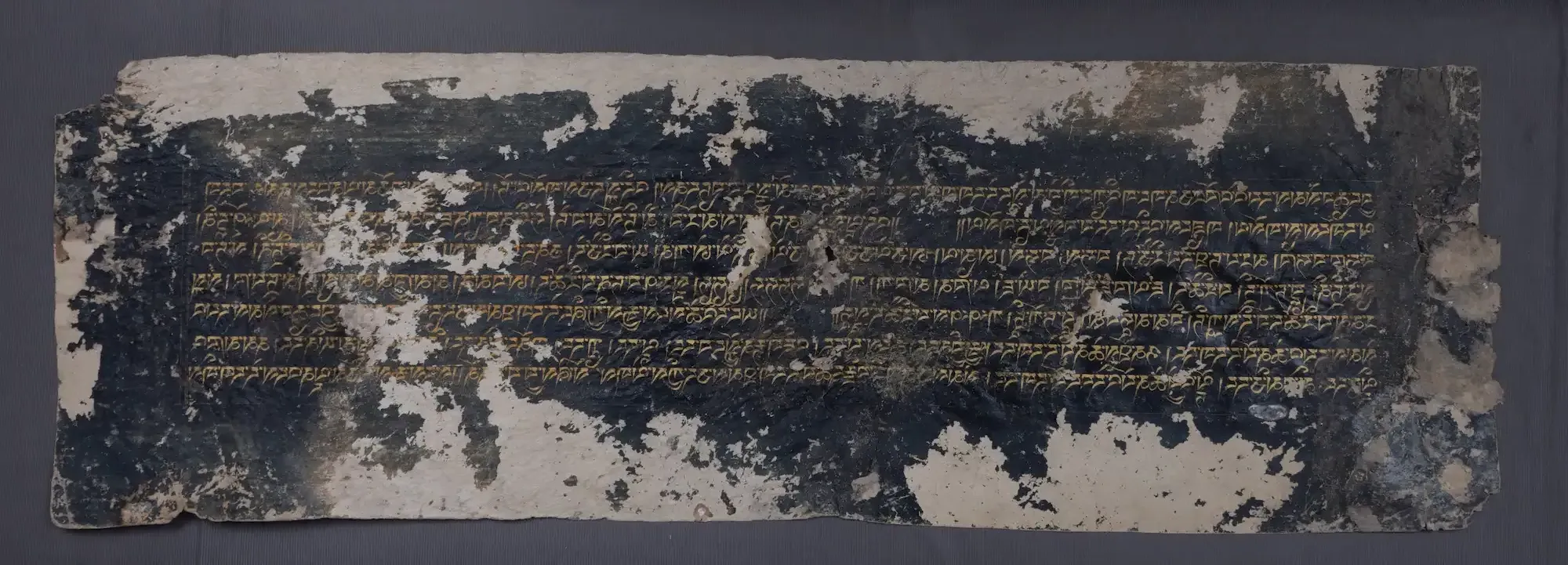
Manuscripts and books entrusted to the studio have primarily originated from monasteries and private collections across Ladakh. Many of these materials have suffered deterioration due to age, environmental factors, handling, and inadequate storage conditions. Each manuscript and book is carefully assessed, documented, and treated using conservation methods that prioritise the preservation of original materials and historical integrity. The studio undertakes cleaning, stabilisation, repair, and preventive conservation measures with utmost care, ensuring that these invaluable repositories of knowledge and cultural memory are preserved for future generations.
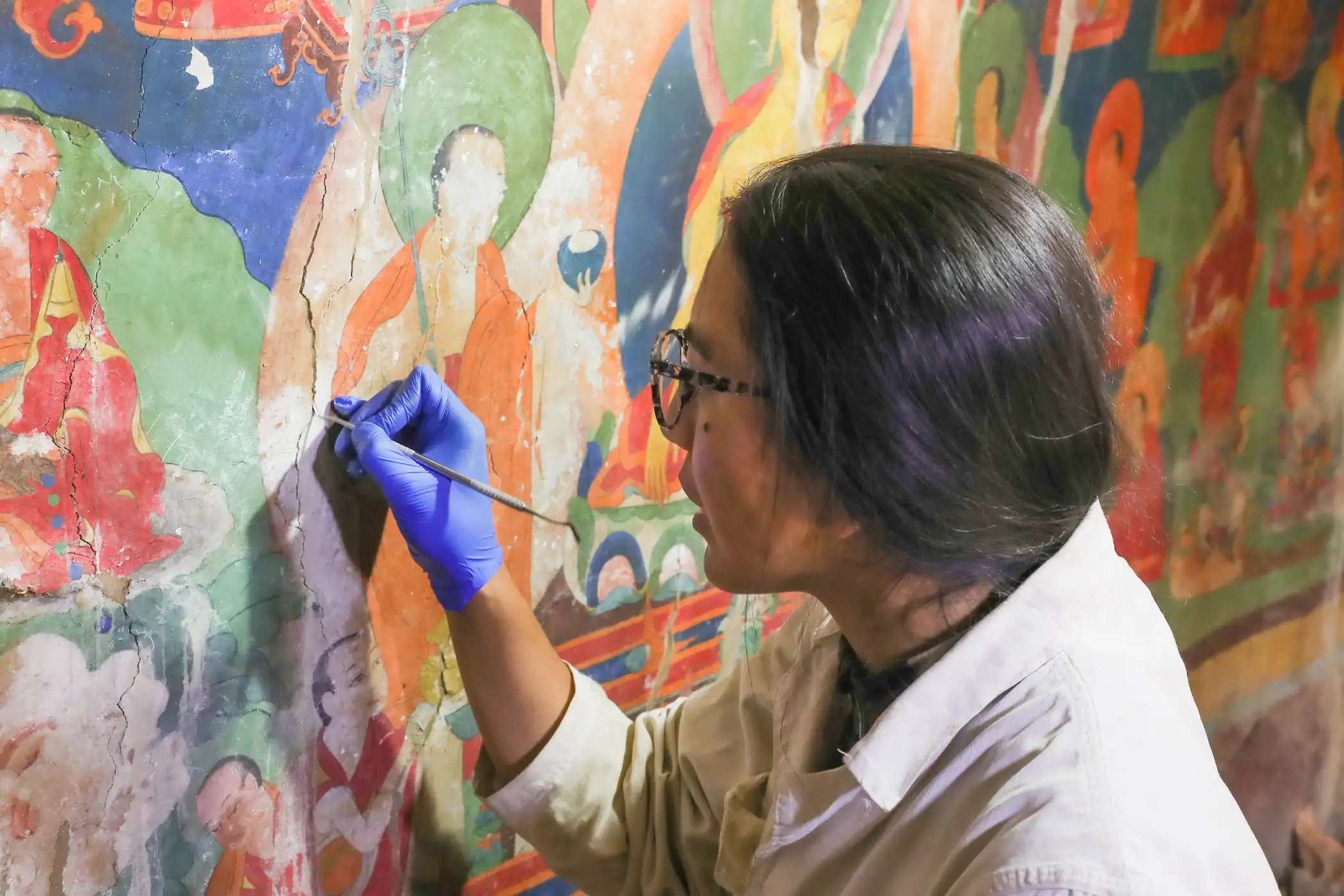
Since its establishment in 2017, Shesrig has been actively engaged in the conservation and restoration of wall paintings, gradually taking on independent conservation projects across Ladakh and the Himalayan region. Over the years, the organisation has worked on mural traditions spanning a remarkable chronological range, from wall paintings dating to the late 8th century to those of the 20th century. The team has undertaken projects both independently and in collaboration with various organisations, monasteries, and institutions, applying scientific conservation methodologies while respecting traditional materials, techniques, and local knowledge systems.
Shesrig's mural conservation work encompasses condition assessment, documentation, stabilisation, conservation treatment, preventive care, and capacity building at project sites. The organisation's expertise has extended beyond Ladakh to important cultural heritage sites in Mustang, Nepal, and Pemayangtse Monastery in Sikkim, while continuing to work extensively across numerous monasteries and heritage sites throughout Ladakh. Through these projects, Shesrig has contributed significantly to the preservation of Himalayan wall painting traditions and the development of sustainable conservation practices in the region.
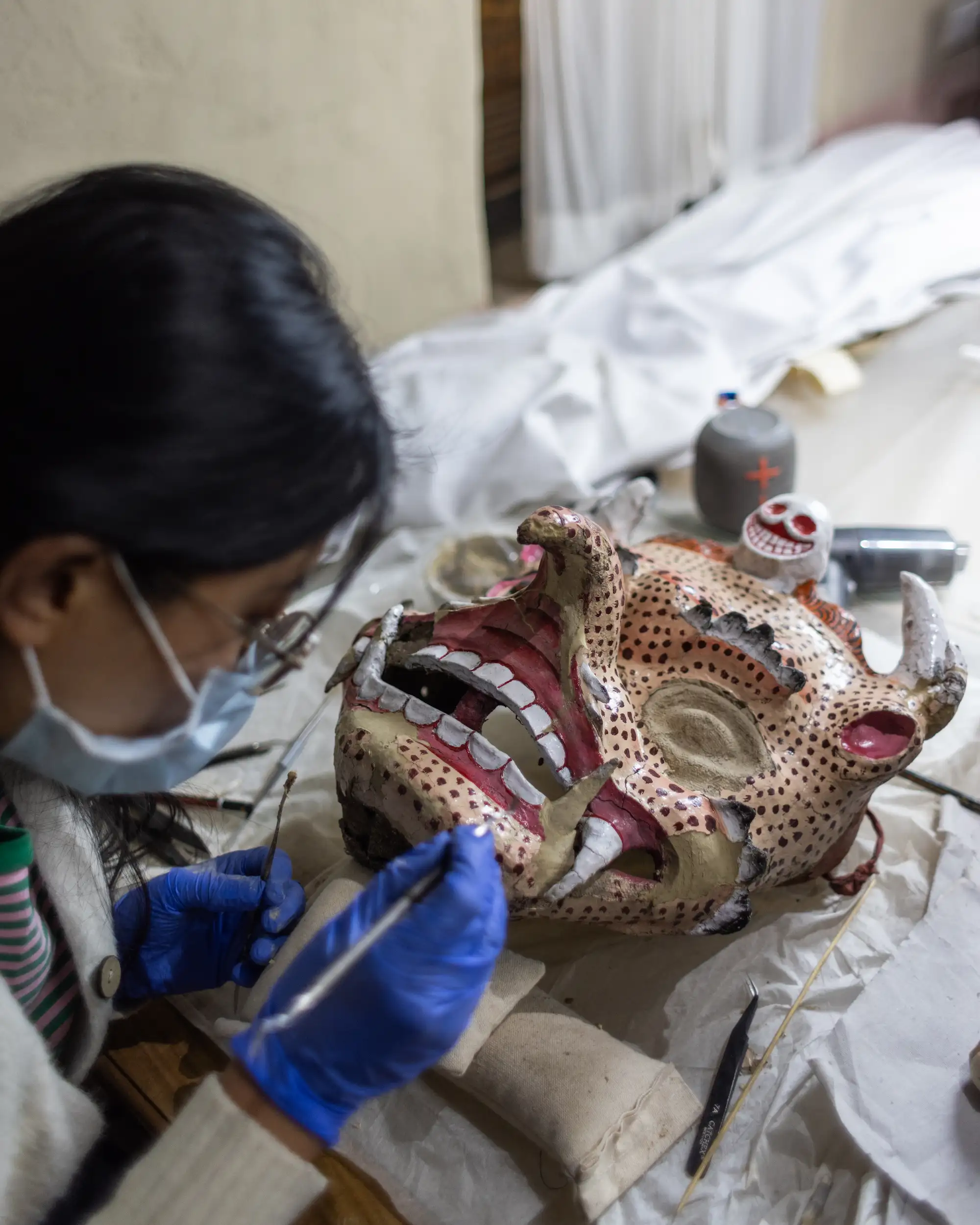
We specialise in the conservation and restoration of clay sculptures, particularly those found in Himalayan monasteries and heritage sites. These sculptures often possess immense historical, artistic, and spiritual significance and require highly specialised conservation approaches that respect both their material integrity and religious context.
Our work includes condition assessment, documentation, stabilisation of fragile structures, consolidation of deteriorated materials, treatment of cracks and losses, surface cleaning, and preventive conservation measures. We address a range of deterioration issues, including structural instability, environmental damage, salt deposition, biological growth, and damages resulting from previous inappropriate interventions.
In addition to clay sculptures, we have also worked on the conservation of metal sculptures, undertaking condition assessments, cleaning, corrosion management, and preventive conservation treatments. Our interventions are guided by the principles of minimal intervention, reversibility, and the use of compatible conservation materials and methods. By combining scientific conservation techniques with an understanding of traditional craftsmanship and Buddhist artistic practices, we strive to ensure the long-term preservation of these invaluable sculptural traditions for future generations.
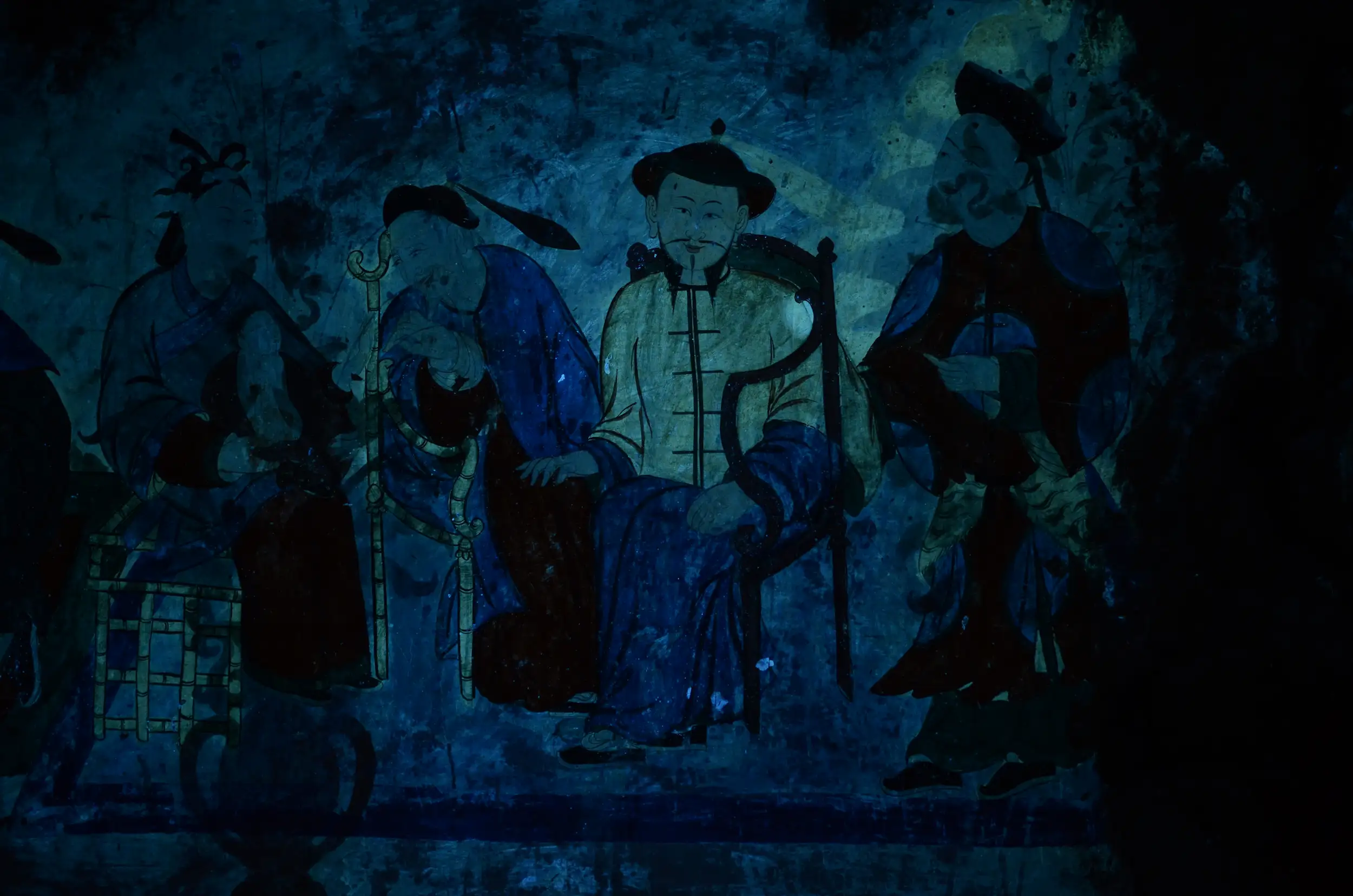
Shesrig is equipped with a multispectral imaging (MSI) system and has initiated specialised technical studies as part of its conservation services. Multispectral imaging is a non-invasive and non-destructive analytical technique that enables the examination of artworks and cultural objects beyond the visible spectrum. The technology assists in revealing underdrawings, faded inscriptions, previous interventions, hidden details, pigment variations, and areas of deterioration that may not be visible to the naked eye.
The integration of multispectral imaging into our practice has significantly strengthened its documentation and research capabilities, allowing for more informed conservation decision-making and scientific understanding of heritage objects. The service is applied to wall paintings, manuscripts, thangka paintings, and other cultural materials, supporting condition assessments, conservation planning, authentication studies, and long-term monitoring of heritage collections. Through this facility, Shesrig Foundation aims to promote scientific research and advance technical studies in the field of art conservation and cultural heritage preservation in the Himalayan region.
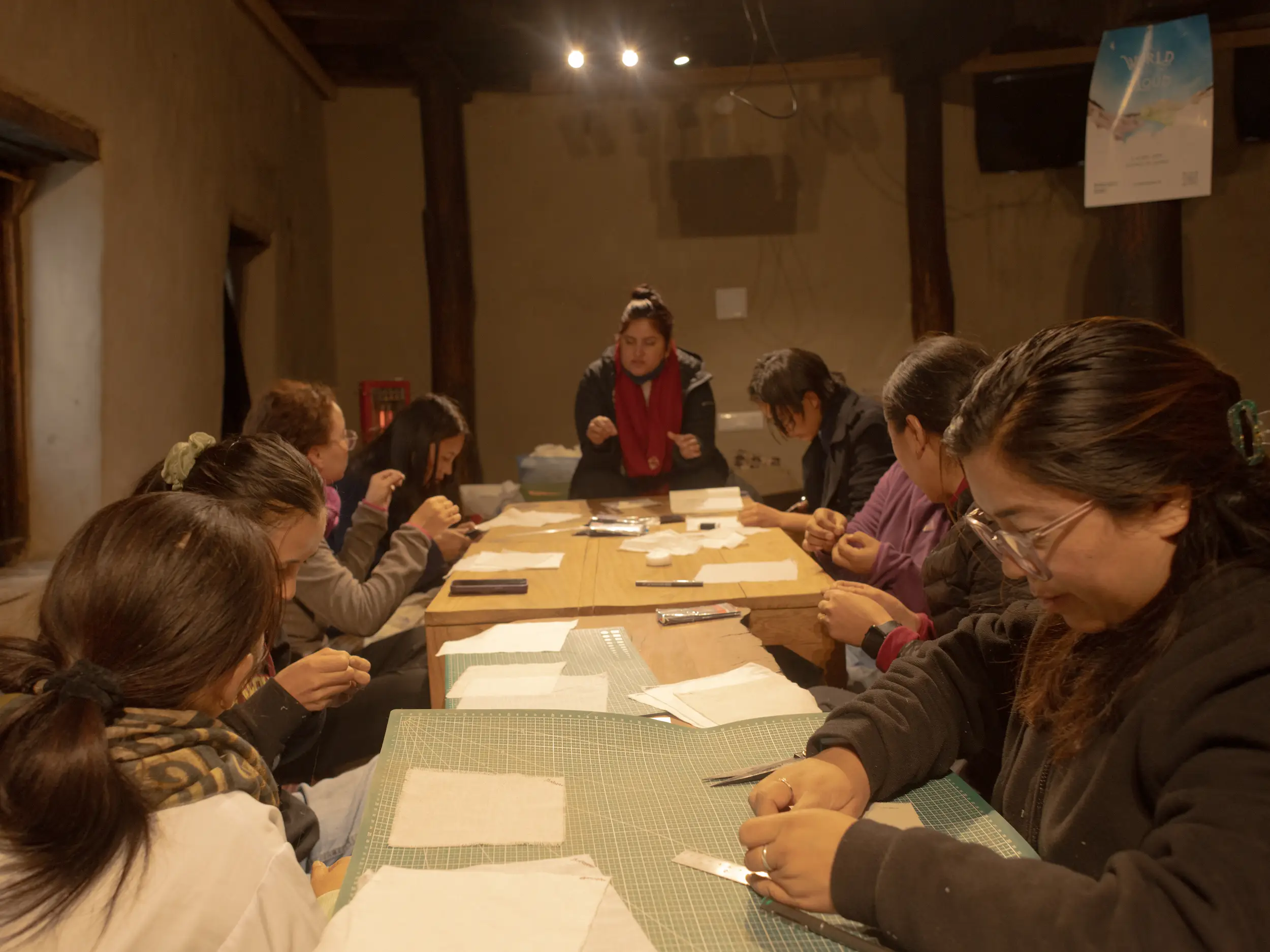
We provide specialised collection care training and storage re-organisation services for museums, monasteries, archives, libraries, and private collections. Our workshops are designed to build local capacities in the preventive conservation of heritage collections by equipping custodians and staff with practical knowledge on the safe handling, documentation, storage, and monitoring of cultural objects.
We also undertake the re-organisation of collection storage spaces by assessing existing conditions and implementing systematic storage solutions that improve accessibility, minimise risks, and ensure the long-term preservation of collections. Our interventions include collection surveys, inventory management, condition assessments, environmental monitoring, preventive conservation measures, and the design of appropriate storage systems using archival-quality materials wherever possible.
Through these initiatives, we aim to establish sustainable collection management practices and empower institutions and communities to become active custodians of their own cultural heritage.
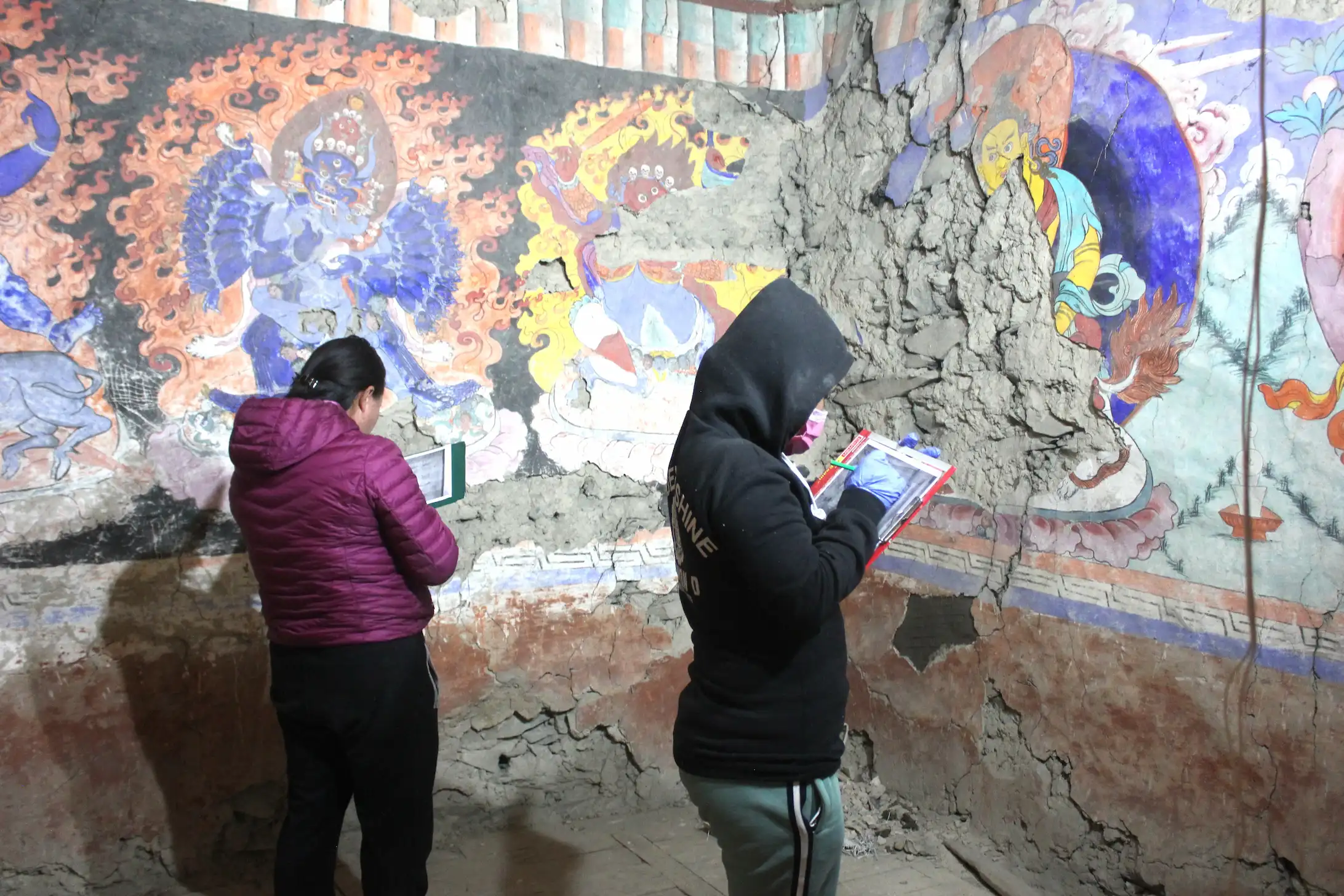
We undertake comprehensive condition assessment and documentation of heritage sites, including historic buildings, monasteries, wall paintings, archaeological sites, museums, and cultural landscapes. Our approach combines detailed visual surveys, scientific documentation methods, and traditional knowledge systems to understand the significance, current condition, and conservation needs of each site.
The condition assessment process involves identifying structural issues, material deterioration, environmental threats, biological growth, previous interventions, and other factors affecting the integrity of the heritage resource. We prepare detailed condition reports, risk assessments, and conservation recommendations to support informed decision-making and long-term management strategies.
Our documentation services include measured drawings, photographic documentation, mapping of deterioration patterns, inventory preparation, architectural recording, and digital documentation techniques such as photogrammetry and 3D modelling where required. The resulting documentation serves as a valuable baseline record for conservation planning, monitoring, research, interpretation, and future interventions, ensuring that heritage sites are systematically documented and preserved for future generations.


 +91 6005570573